When to Send a Dad's Birthday Card (and Why Earlier Is Better)
The obvious answer is: send it so it arrives on his birthday. But that narrow window causes more stress than it needs to. A card that arrives a day or two early is not a mistake, it's a gift. Your dad gets to read it before the day gets busy, before the phone calls and the cake and the noise. He has a moment alone with it. That's often when a card does its best work.
If you're mailing a physical card, plan for three to five business days of transit time within the continental United States, more if you're sending to a rural address or around a holiday. The safest rule: drop it in the mail at least a week before his birthday. If you're using a service like Cards From You, factor in the time for the card to be written and processed before it ships.
If you've already missed the date, send it anyway. A card that arrives a week late with a line acknowledging the tardiness is far better than no card at all. Something like "I know I'm late, that's on me, not on how much I wanted to say this" turns a logistical failure into a human moment. Dads, on the whole, appreciate honesty more than punctuality.
What Tone to Strike: Matching the Message to the Relationship
The single biggest mistake people make writing to their dad is defaulting to a tone that doesn't match how they actually talk to each other. If you and your dad trade jokes and sarcasm, a suddenly earnest and formal card will feel strange to both of you. If your relationship is quieter and more reserved, a card full of effusive declarations will embarrass him. Read the room, the room being twenty or forty years of knowing this specific person.
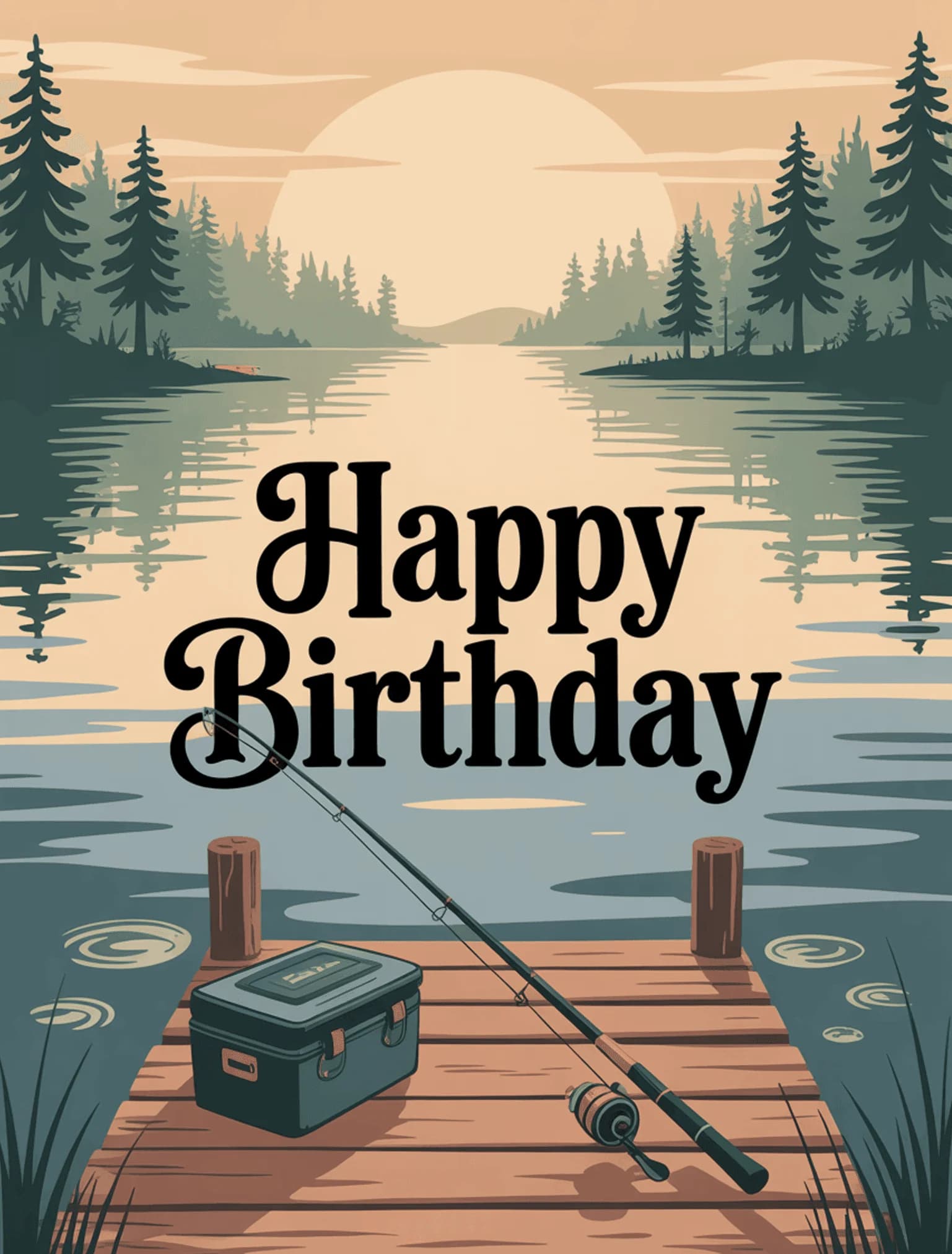
For close, easy relationships, lean into specificity and humor. Reference something real: a trip you took, a phrase he always uses, a hobby he's slightly too obsessed with. Specificity is what separates a message that feels written *for him* from one that could have been written for any dad on the planet. "You've been talking about that fishing rod for three years" is more affectionate than "You're the best dad in the world."
For more complicated or distant relationships, estrangement that's thawing, years of little contact, a difficult history, the tone should be simple and honest without being heavy. A birthday card is not the place to resolve old grievances or make large emotional declarations. Keep it warm, keep it short, and let the act of sending the card carry some of the meaning. You don't have to say everything. You just have to say something true.
How to Structure What You Write: A Simple Framework That Works
A good card message has three parts, and none of them need to be long. Start with a specific acknowledgment, something that shows you were paying attention to who he is, not just that today is his birthday. Then move to the emotional core: what you actually want him to know. Finally, close with a forward-looking line that points toward something shared, a plan, a hope, a tradition. That structure gives the message shape without making it feel like a formula.
In practice, the whole thing might be four sentences. "You've spent the last year building that deck in the backyard, and I think about how much patience that takes. I want you to know I notice that kind of thing. You show up in quiet ways that matter more than you probably realize. I'm glad we're having dinner on Saturday, I'll bring the good beer." That's it. That's a real card.
Avoid the trap of writing what you think a card is *supposed* to say. Phrases like "words can't express" or "you mean the world to me" are not wrong, but they're so worn that they pass through the brain without registering. If you find yourself writing a phrase you've seen on a store-bought card, stop and ask: what is the actual, specific thing I'm trying to say? Then say that instead. The more particular the detail, the more the message feels like it came from you.
Common Pitfalls to Avoid When Writing to Your Dad
Overshooting is the most common mistake. People feel the pressure of the occasion and write more than the relationship currently supports, big declarations of love to a dad they see twice a year, or deeply personal reflections to someone who communicates in one-liners. This creates a mismatch that makes both parties uncomfortable. The message should reflect where the relationship *is*, not where you wish it were.
Undershooting is the other failure mode. "Happy Birthday, hope you have a great day" is not a message, it's a caption. If you're going to the effort of sending a physical card, put something in it. Even one specific, genuine sentence elevates a card from obligatory to meaningful. "I've been thinking about the advice you gave me last spring, and I think you were right" is a single sentence that will stay with him.
Finally, avoid making the card about yourself. This sounds counterintuitive, you're the one writing it, after all, but there's a difference between sharing a personal reflection and centering your own feelings so much that the birthday person becomes a supporting character. The card should leave him feeling seen. Check your draft: is the subject of most sentences "I" or "you"? Lean toward "you." "You have always known when to say something and when to just show up" is a gift. "I have always appreciated how you knew when to say something" is the same thought, but it's slightly turned inward.
Sample Approaches by Relationship and Situation
Not every dad-child relationship looks the same, and the right message for a close, daily-contact relationship is very different from the right message for a stepfather you've grown into, or a father-in-law you respect but don't know intimately. The key in each case is to write to the version of the relationship that actually exists.
For a stepfather or father figure who came into your life later: acknowledge the specific role he played without overstating it or understating it. You don't have to call him "dad" if that's not your word for him, and you don't have to avoid it if it is. What matters is naming something real he did, showed up, taught you something, made your mother happy, made the house feel stable. That specificity is more powerful than any title.
For a father-in-law: warmth and respect are the right register, with a light touch of humor if the relationship supports it. You're not writing to a stranger, but you're also not writing to someone who watched you grow up. Acknowledge the day, say something genuine about who he is, and if it's true, say that you're glad he's in your life. Keep it to three or four sentences. Less is more when the relationship is still building.
Etiquette Details That Actually Matter
Handwriting matters more than most people think. A card that arrives with a handwritten message, real pen, real ink, communicates effort in a way that a printed insert or a text message simply cannot. The physical object is part of the message. This is not nostalgia; it's the reality of how people experience receiving mail. Your dad will likely keep a handwritten card in a way he will not keep a screenshot of a text.
If your handwriting is genuinely difficult to read, write slowly and print rather than cursive. Legibility is more important than style. If you're using a card-mailing service, make sure the service uses actual handwriting rather than a handwriting font, the difference is visible, and a printed font defeats most of the purpose.
Sign with whatever name he calls you. If he calls you by a nickname, use it. If the family dynamic is such that you sign family cards collectively, that's fine, but add your own line above the signature so your voice is distinct from the group. "Love, the whole crew" is warm. "Love, the whole crew" with a personal sentence from you first is warm *and* meaningful. The signature is the last thing he reads; make sure it lands.
Sample messages
“You've been my go-to call for every decision I can't figure out on my own, and I hope you know how much that means. Happy birthday, Dad, I'm glad you picked up the phone all those times.”
“I was going to write something heartfelt, but I know you'd just make a face. So: happy birthday. You're still the funniest person I know, even when you're trying to be serious.”
“I've been thinking about you more than usual lately. I wanted to say happy birthday, and I wanted you to know I'm glad you're still around.”
“You spent forty years showing up for other people, now it's your turn to figure out what you actually want to do on a Tuesday. Happy birthday. I hope this chapter is a good one.”
“I know this year has been harder than most, and I want you to know I think about you every day. Happy birthday, you are tougher than you give yourself credit for, and I'm in your corner.”
“You didn't have to show up the way you did, but you did anyway, every single time. That's not something I take for granted. Happy birthday, thank you for being exactly who you are.”
“I got lucky in a lot of ways when I married into this family, and you're near the top of that list. Happy birthday, I hope we get to celebrate together soon.”
“This birthday probably feels different this year, and I just want you to know I'm thinking about you. You carry a lot for this family. I love you, Dad.”
“Watching you with her has been one of my favorite things about this whole year. Happy birthday, Dad, you're pretty good at this grandfather thing.”
“Every time I fix something around the house, I hear your voice telling me to measure twice. I'm grateful for that more than you know. Happy birthday.”
“The miles make it easy to let time slip by without saying what I mean to say. So here it is: I miss you, I'm proud to be your kid, and happy birthday.”
“Sixty looks good on you, though I know you'd argue the point. You've earned every one of those years, and I'm glad I've been here for a lot of them. Happy birthday, Dad.”
“I know today is complicated without Mom here. I want you to know we're all thinking about you, and we're going to make sure you don't spend it alone. We love you.”
“I know you'll say you don't need a fuss made, but I'm making one anyway. You deserve to be told, clearly and out loud, that you matter to this family. Happy birthday, Dad.”
“I'm glad we found our way back to each other. There's a lot of time to make up for, and I think we're doing alright. Happy birthday.”
Frequently asked
How long should a message in a dad's birthday card actually be?
Three to six sentences is the sweet spot for most relationships. That's long enough to say something real and short enough to avoid rambling. The physical space inside a greeting card is actually a useful constraint, it forces you to choose your words. If you find yourself writing a paragraph that spills onto the back of the card, you've probably included things that belong in a conversation, not a card. Trim to the two or three most important things you want him to feel when he reads it.
What if I'm not close with my dad and don't want to overstate the relationship?
Write to where the relationship actually is, not where you think it should be. A simple, honest message, "I've been thinking about you and wanted to say happy birthday", is not cold; it's appropriate. The act of sending a physical card already communicates that you made an effort. You don't need the words to do more heavy lifting than the relationship supports. Avoid phrases that would feel untrue if said out loud. Sincerity within limits is always better than warmth that rings false.
Is it okay to be funny in a birthday card to my dad?
Absolutely, if that's genuinely how you two communicate. Humor is not a lesser form of affection, for a lot of father-child relationships, it's the primary language of love. The key is that the joke should be specific to him, not a generic quip. A reference to something only the two of you would find funny is more meaningful than a clever line that could appear on any card. You can also lead with humor and land on something sincere in the last sentence, that combination often works extremely well.
Should I mention something sad or difficult, like his health or a recent loss, in a birthday card?
Yes, if ignoring it would make the card feel disconnected from reality. A birthday card doesn't have to pretend everything is fine. Acknowledging something hard, briefly, without dwelling on it, actually makes the card feel more human. The key is proportion: one sentence of acknowledgment, then pivot toward warmth or hope. "I know this year has been a lot" followed by something affirming is far better than a relentlessly cheerful card that feels tone-deaf to what he's actually going through.
Can I send a card on behalf of the whole family, or should I write my own separate message?
Both can work, but a group card and a personal card serve different purposes. A card signed by the whole family says "we're all thinking of you," which is meaningful. A card from you alone says "I specifically wanted to tell you something", and that distinction matters. If the family is sending one card, consider adding your own handwritten line above the group signature so your voice is present and distinct. If the relationship warrants it, send your own card in addition to the family one. Two cards is not excessive; it's thorough.
Related guides
What to Write in a Birthday Card for Your Husband
Birthday card messages for your husband, romantic, funny, sincere. Examples for new marriages, decades together, and quiet moments.
What to Write in an 18th Birthday Card
18th birthday card messages from parents, family, and friends, not corny, not cliche. Genuine words for the actual transition.
What to Write in a 1st Birthday Card
First birthday messages that speak to both the baby and the parents. Sweet, funny, and milestone-marking examples.
What to Write in a 21st Birthday Card
21st birthday card messages that don't reduce to a drinking joke. Examples for friends, siblings, kids of friends, and the birthday adult.